
Phishing Has Evolved, Why Staff Awareness Matters More Than Ever
Article Summary
Phishing is no longer limited to badly written scam emails. It is now more convincing, more targeted, and often far harder to spot at a glance. That is why staff awareness remains one of the most important security controls any business can invest in.
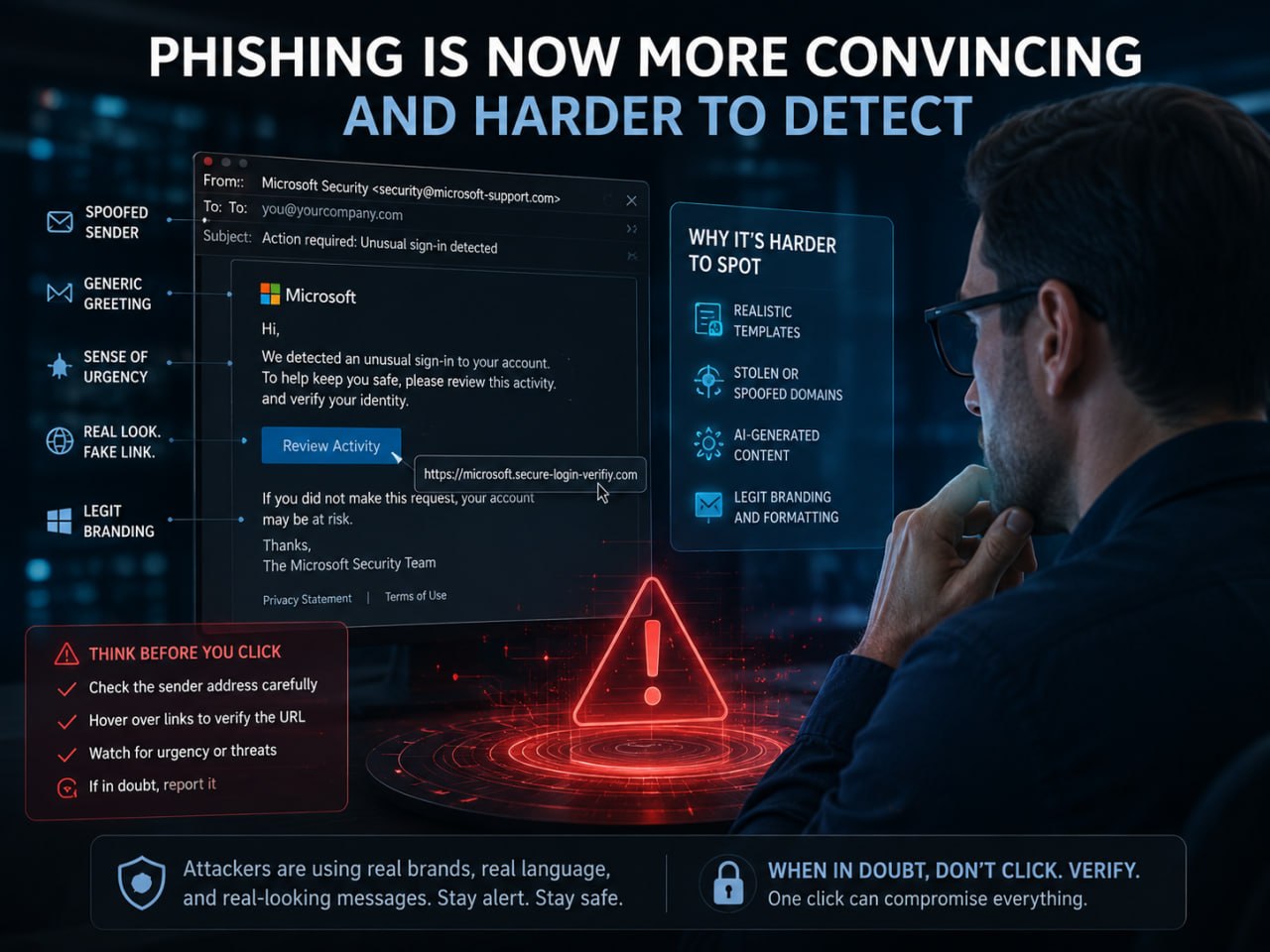
For a long time, phishing was treated as something easy to spot. The assumption was that suspicious messages were full of spelling mistakes, strange formatting, broken English, and obvious warning signs. In many cases, that is no longer true.
Phishing has evolved. The messages are cleaner, more believable, and often far more targeted. They are designed to look routine, relevant, and urgent. That is exactly why staff awareness matters more than ever. The technical controls still matter, but people remain one of the most important lines of defence.
Phishing is no longer just obvious scam email
Modern phishing does not always arrive as a badly written message from an implausible sender. It may arrive as a convincing invoice request, a password reset prompt, a supplier update, a file-sharing notification, or a message that appears to come from a senior contact. It may also arrive by text message, collaboration platform, or social media rather than traditional email alone.
The problem is not just that attackers are more creative. It is that they are better at imitating normal business behaviour. That means the old idea of spotting a phishing attempt purely by poor presentation is no longer enough.
The danger today is not only obvious fraud. It is believable fraud that arrives looking routine, urgent, and professionally presented.
Why staff awareness still matters
Many businesses understandably focus on products first, security filters, antivirus, spam protection, multi-factor authentication, and monitoring tools. All of those are important. But even good technical controls do not remove the need for staff awareness.
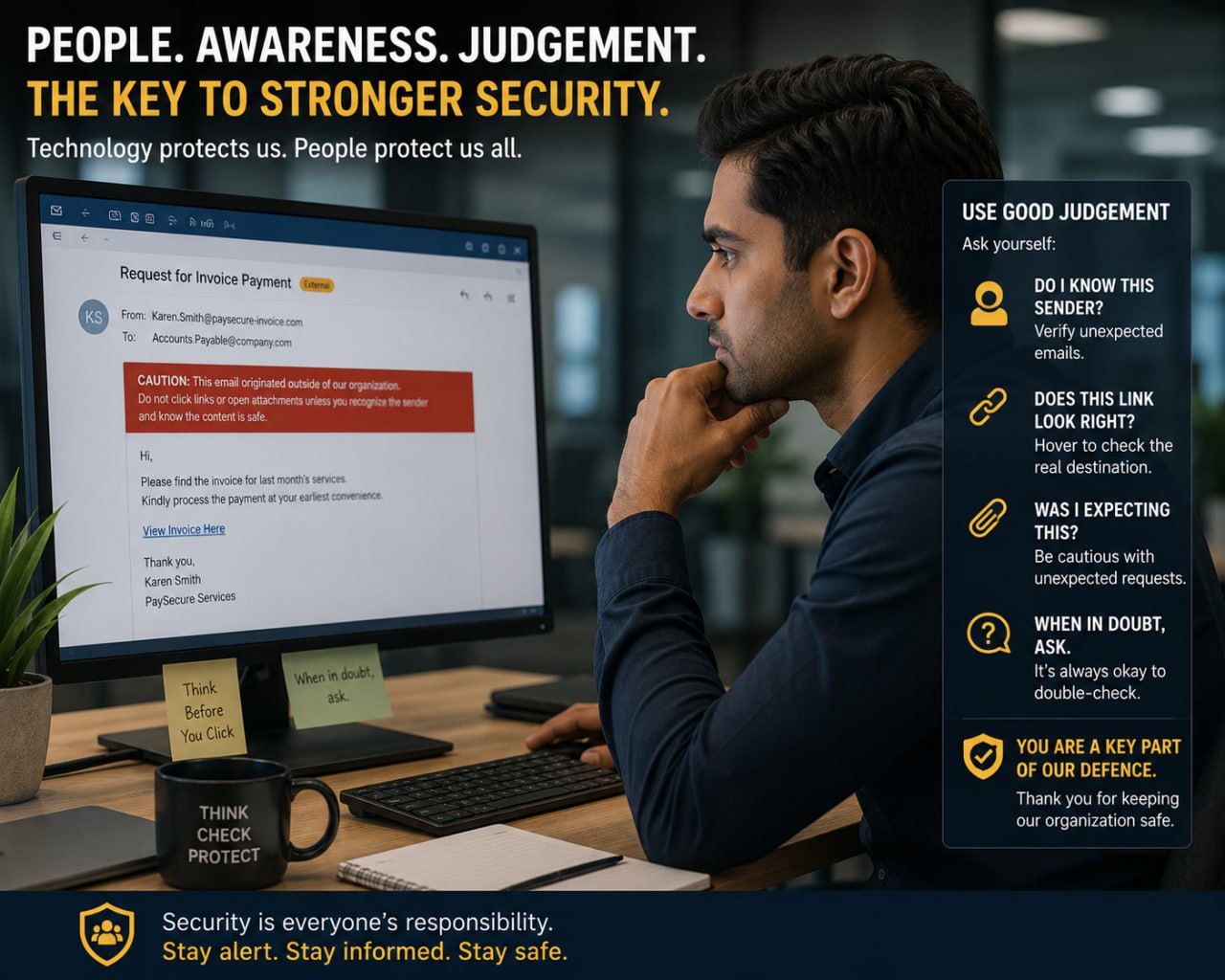
Someone still has to decide whether a message feels right. Someone still has to question an unusual payment request, an unexpected login prompt, or a file link that appears slightly out of place. Someone still has to pause long enough to avoid turning a suspicious message into an actual incident.
That is where awareness makes the difference. Not because staff should be expected to behave like security specialists, but because they should feel confident challenging something that does not look quite right.
Why urgency is still one of the biggest weapons
Phishing works because it manipulates attention and pressure. Attackers want someone to act quickly, not carefully. They rely on busyness, habit, and distraction.
That urgency might sound like:
- your account will be suspended
- payment is overdue
- you must review this immediately
- the director needs this action taken today
- a document is waiting for approval
None of that is new in principle, but the quality of delivery has improved. The messages now look closer to normal business traffic, which makes rushed decisions even riskier.
Awareness should be practical, not theatrical
Good staff awareness is not about scaring everyone with endless horror stories. It is about helping people recognise the patterns that matter and making it normal to slow down, check, and ask.
That means practical things such as:
- checking the sender properly, not just the display name
- being cautious with links and attachments
- treating unexpected login prompts with suspicion
- confirming unusual payment or bank detail changes through another route
- reporting suspicious messages quickly instead of ignoring them
When awareness is handled well, it becomes part of operational behaviour rather than a once-a-year compliance exercise.
Why this matters even more for smaller businesses
Smaller businesses are often more exposed because they may have leaner internal controls, faster decision chains, and less formal review around communications or payment changes. That does not make them careless. It just makes them attractive targets for opportunistic attackers who know that busy people often act quickly.
That is why phishing awareness should not be treated as a large-enterprise concern. It is just as relevant, if not more so, for small and growing businesses that rely heavily on email, shared documents, cloud services, and day-to-day responsiveness.
Final view
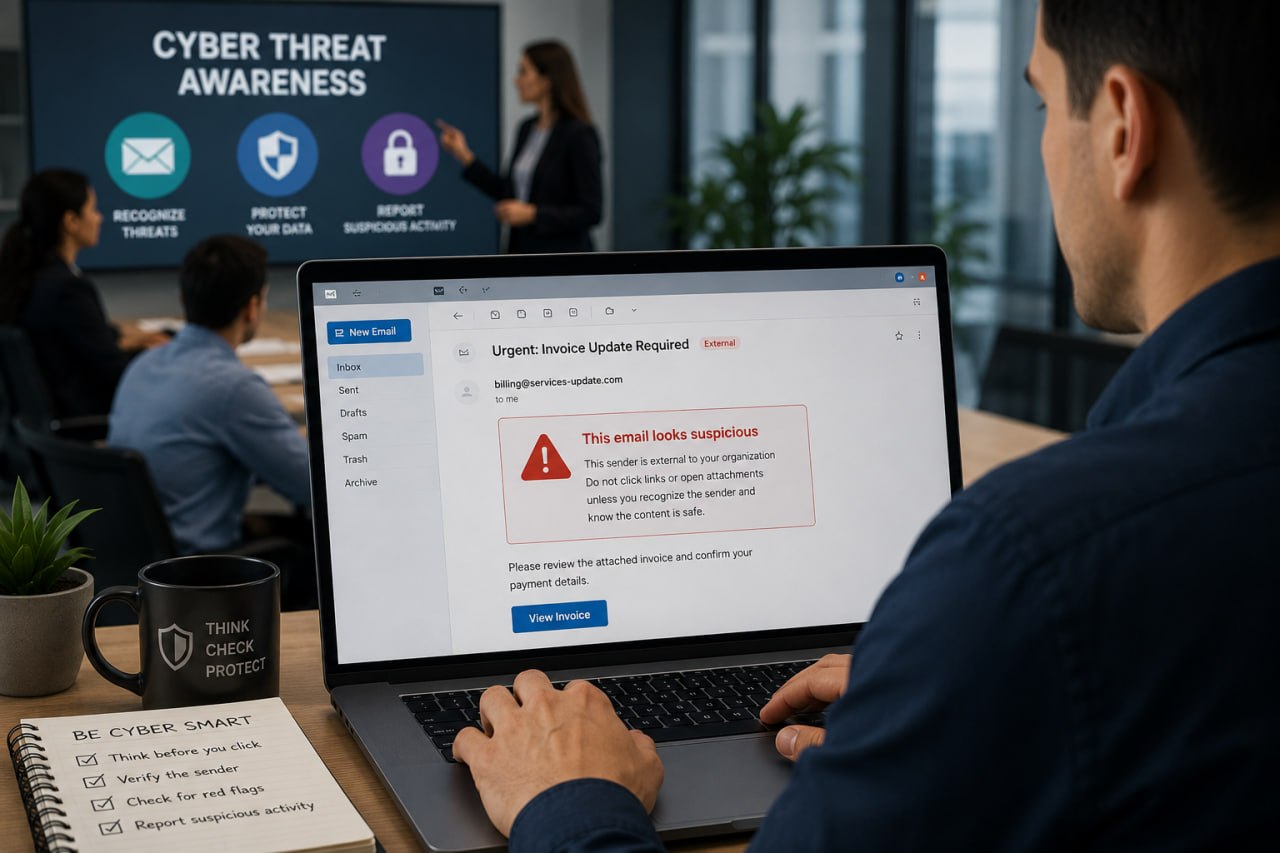
Phishing has become more polished, more believable, and more aligned to normal business activity. That is exactly why staff awareness still matters so much.
The goal is not to expect every employee to become a security analyst. The goal is to build a working culture where suspicious messages are questioned, unusual requests are checked, and people feel able to pause before acting.
In the current threat landscape, awareness is not a soft extra. It is a practical and necessary part of business security.